Ice dams
Stop ice dams at the source, not just the eaves.
Icicles look nice on a postcard. On your roof they can mean water backing up under the shingles and into your walls.
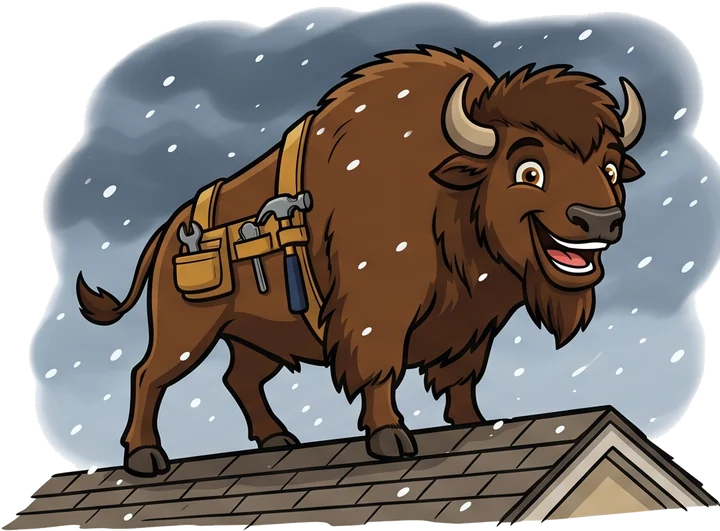
An ice dam is a ridge of ice along the edge of the roof that traps melting snow behind it. University of Minnesota Extension explains that they form when upper parts of the roof are above freezing while the eaves stay below. Meltwater runs down, hits the cold edge and refreezes. The water stuck behind that ice can work under shingles and into ceilings and walls.
The real cause is usually heat escaping from the house into the attic. Air leaks, thin insulation, exhaust vents ending near the roof and leaky ducts all warm the roof deck. We repair the roof damage, check attic airflow and venting, and point out heat loss so you can fix it with us or a weatherization pro. Then we make sure the eaves have proper ice barrier underneath.
Signs you have an ice dam problem.
- Thick ice along the gutters and eaves
- Large icicles hanging from the roof edge
- Water stains on ceilings near exterior walls
- Peeling paint or damp drywall under the eaves
- Upper roof bare while the eaves stay icy
- Frost or wet insulation in the attic
How it works
How we deal with ice dams.
Safe assessment
We look from the ground and the attic first, because walking an icy roof is dangerous.
Find the heat loss
We check attic insulation, air leaks, exhaust and duct routing, and roof venting.
Stop active leaks
When it is safe, we open a path for water without chopping into shingles.
Repair and rebuild
We replace damaged decking and shingles and install ice barrier along the eaves.
Plan for next winter
We share photos and a plain list of fixes that reduce future dams.
Utah roofs
Why ice dams show up on Utah benches.
Cities along the base of the Wasatch get more snow, as a rule, than many parts of the Midwest and Northeast. Average temperatures drop about 3 degrees Fahrenheit for every 1,000 feet of elevation, so bench neighborhoods tend to hold snow longer than the valley floor. Sunny days followed by cold nights set up the melt and refreeze cycle that ice dams feed on.
Inversion season adds a twist. A typical Utah winter sees about five to six multi-day inversion episodes, according to Utah DEQ, when cold air gets trapped in the valleys under warmer air above. Snow can sit on roofs for days during those stretches, which gives a warm attic plenty of time to melt the bottom layer and build ice at the eaves.
Questions
Common questions.
Should I chip the ice off my roof?
Please do not. Chipping, prying or salting can tear shingles and damage gutters, and University of Minnesota Extension warns that getting on the roof in winter risks injury and damage to the house. If water is coming inside, protect your belongings and let us find a safe way to relieve the dam.
Do heat cables stop ice dams?
They can help in one trouble spot by keeping a path open for meltwater, but they treat the symptom. They use power, have to be installed correctly, and do nothing about the heat loss that causes the dam. We usually suggest fixing air leaks, insulation and venting first, then using cables only where a problem remains.
Will a new roof fix my ice dams?
A new roof with ice barrier along the eaves helps keep backed up water out of the house, but it does not stop the dam from forming. That comes from controlling heat loss into the attic. The best result usually pairs roof work with air sealing and insulation, and we will be clear about which part is which.
Does a roof rake help?
Pulling snow off the lower few feet of roof from the ground can reduce ice dams in the short term. Use a rake made for roofs, stay off ladders on icy days and go easy, since University of Minnesota Extension notes that roof rakes can damage roofing materials if used carelessly.
More answers: Snow on roofs and ice dams in Utah, Attic ventilation, insulation and solar panels
Where we work
Ice dams across Northern Utah.
Related services
You might also need.
Leak repair
Water rarely comes in where it shows up. We trace it back to where it starts and fix that spot.
Learn moreRoof repair
Most roofs do not need replacing. They need someone to find the weak spot, fix it right and show you proof.
Learn moreRoof replacement
When repairs stop making sense, we tear off to the deck and build a roof ready for bench snow, canyon wind and high altitude sun.
Learn moreWant a straight answer about your roof?
Free inspection, photos of everything we find, and no pressure.